
6 min read
In this guide
- Why are more customers paying by card?
- What are the benefits of accepting card payments?
- Faster transactions
- Greater customer choice
- Easier sales tracking
- Remote and online payments
- Less cash handling
- What are the disadvantages of card payments?
- Why does cash still matter?
- Cash or card: which is better for a small business?
- Card machine or EPOS system?
- Are card payments replacing cash?
- Review your card payment and EPOS options
- Make payments easier for your customers
- Frequently asked questions
- Should a small business accept both cash and card?
- Are contactless payments becoming more popular?
- Is taking cash cheaper than accepting cards?
- Does a business need EPOS to accept card payments?
Card payments have become the dominant way to pay in the UK, but cash still matters to many customers. For businesses, the question is not simply whether cards are replacing cash. It is whether the payment options available match how customers now expect to pay.
According to UK Finance’s latest payment figures, cards accounted for 64% of UK payments in 2025, while cash represented 8%. Contactless payments made up 39% of all payments, and 65% of UK adults were registered for at least one mobile payment service.
This guide compares card payments and cash, explains the practical benefits and costs of each, and helps businesses decide which payment options to offer.
Why are more customers paying by card?
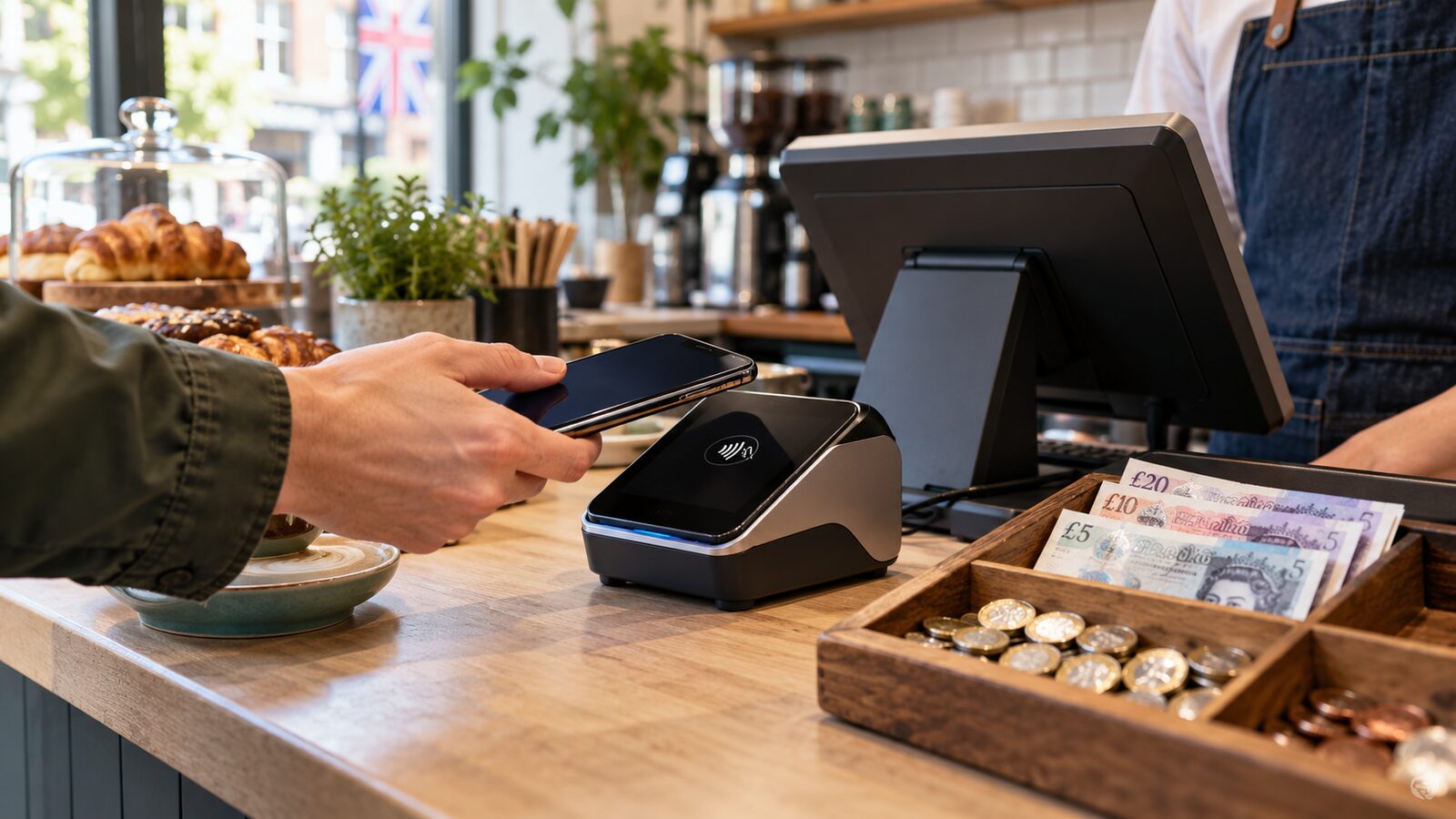
Card payments are quick, familiar and convenient. Customers can pay using a physical debit or credit card, smartphone, smartwatch or another contactless device without needing to carry the correct amount of cash.
For customers, common benefits include:
- Faster checkout
- No need to visit a cash machine
- Contactless and mobile-wallet payments
- A digital record of purchases
- The ability to pay online, remotely or through a payment link
- Greater flexibility for larger purchases
Contactless payments can be particularly useful for cafés, restaurants, shops and other businesses where customers expect a quick checkout. Debit cards first overtook cash as the UK’s most frequently used payment method in 2017, according to the Bank of England.
What are the benefits of accepting card payments?
Faster transactions
Contactless card and mobile-wallet payments can be completed in seconds. This can reduce queues and help staff serve customers more efficiently during busy periods.
Greater customer choice
Some customers prefer cash, while others expect to pay by card or phone. Accepting several payment methods allows customers to choose the option that suits them.
Easier sales tracking
Card payments create an electronic transaction record. When a card terminal is connected to an EPOS system, a business may also bring together payments, sales reporting, stock information and other operational data.
Remote and online payments
Modern payment facilities can allow businesses to accept payments online, over the phone or through secure payment links. This can be useful for service businesses, deposits, bookings and telephone orders.
Less cash handling
Taking fewer cash payments can reduce the time spent counting tills, preparing banking and transporting cash. It may also reduce the amount of physical money held on the premises.
What are the disadvantages of card payments?
Card payments are convenient, but businesses should understand the complete cost of accepting them. Depending on the provider and agreement, charges may include:
- Transaction fees
- Monthly service charges
- Terminal rental
- Authorisation fees
- Additional charges for certain card types
- Early termination or contract fees
- EPOS software or integration costs
The lowest advertised transaction rate does not always result in the lowest overall cost. Businesses should compare the complete package, including equipment, support, settlement times and contract terms. Our guide to card-machine and EPOS fees explains the main charges in more detail.
Card terminals also depend on technology. A suitable connection, reliable equipment and access to support are especially important for businesses processing a high number of transactions.
Why does cash still matter?
Although cash use has fallen, it remains important to many customers. The Bank of England expects people to continue using cash and describes digital payments as additional choice rather than an automatic replacement for it.
Some customers prefer cash because it can help them manage a budget, protect their privacy or make payments when digital services are unavailable. Cash can also provide businesses with a backup if a terminal, internet connection or payment network experiences a temporary problem.
For many businesses, continuing to accept cash alongside cards offers the most inclusive arrangement.
Cash or card: which is better for a small business?
There is no single answer for every business. The right payment mix depends on what the business sells, where it trades and how its customers prefer to pay.
A café may value fast contactless transactions during busy periods. A tradesperson may benefit from a portable card machine or payment link. A retailer may need an integrated EPOS system that connects payments with products and stock. Another business may continue receiving a significant proportion of its payments in cash.
When reviewing the options, consider:
- How customers currently pay
- Average transaction value
- The number of monthly transactions
- Whether payments are taken at a counter, table or customer location
- Whether online or remote payments are needed
- Cash-handling and banking time
- Card-processing fees and contract terms
- Whether payments should connect with stock or sales reporting
The aim is to make it easy for customers to pay while keeping costs and administration manageable for the business.
Card machine or EPOS system?
A standalone card machine processes debit and credit card payments. It may be countertop, portable or mobile, depending on where payments are taken.
An EPOS system can provide a broader set of tools. Alongside recording sales, it may help manage products, stock, staff access, reporting and multiple business locations. An integrated setup can also pass the transaction amount directly to the payment terminal, helping reduce manual entry and checkout errors.
Businesses with straightforward payment requirements may only need a reliable card terminal. Retail, hospitality and other customer-facing businesses may gain more value from an integrated EPOS system. Read our guide on how to choose an EPOS system for a more detailed comparison.
Are card payments replacing cash?
Card payments have become the UK’s most widely used payment method, and contactless cards and mobile wallets are likely to remain central to how customers pay.
Cash has not disappeared. Customers still use it, and some rely on it. The practical approach for many businesses is to support the payment methods their customers want while regularly reviewing costs, equipment and service quality.
Offering an appropriate combination of cash, card, mobile and online payment options can make checkout easier and reduce the risk of losing a sale because a customer cannot use their preferred payment method.
Review your card payment and EPOS options
All Business Service Solutions can help you review your current card-payment setup and compare suitable card machines, payment terminals and EPOS systems.
Make payments easier for your customers
Explore our Card Payments & EPOS service or request a free Card Payments & EPOS Review.
Frequently asked questions
Should a small business accept both cash and card?
For many businesses, accepting both provides the widest customer choice. The right approach depends on customer preferences, transaction values, cash-handling requirements and card-processing costs.
Are contactless payments becoming more popular?
Yes. UK Finance reported 19.2 billion contactless payments during 2025, accounting for 39% of all UK payments.
Is taking cash cheaper than accepting cards?
Cash has no card transaction fee, but businesses should also consider counting time, banking, security, errors and transport. Card costs include processing, terminal and possible contract charges. A fair comparison should consider the complete cost of each method.
Does a business need EPOS to accept card payments?
No. A standalone card terminal may be enough. EPOS can be useful when a business wants payments connected with sales, stock, products, reporting or multiple locations.
Related service: Explore our card payment and EPOS services to see how ABSS can help your business.

